
How does futures customization reduce inventory backlog?
How does futures customization reduce inventory backlog?
Because we produce to your order rather than from a finished-stock catalogue, you commit capital only when you have a design worth making. Style-library designs open at 25 pieces, fully personalized work at 100, and the one-time $30 mold fee on small personalized runs is refunded once a design reaches 100 cumulative pieces. That lets you test a market with a thin first run, then reorder in small batches as demand proves real — instead of buying 500 units up front and hoping they sell.
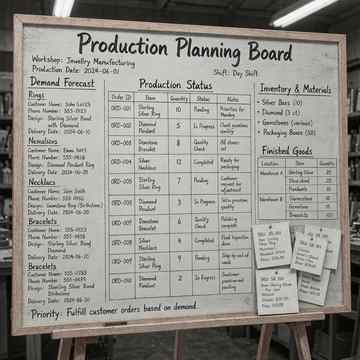
Stock model vs futures model
Why small batches are safer than one big bet
A 25-piece first run from the style library is a market probe, not a warehouse commitment. If the design sells, you reorder 25 or 50 at a time and let sales, not a forecast, set the quantity. If it does not, your loss is one small batch rather than a pallet of dead stock. For seasonal lines this matters most: you never want 500 units of one SKU sitting through the off-season.
How the mold-fee refund de-risks scaling
The $30 mold fee is tooling setup, charged only when a single personalized design sits below 100 pieces. It is returned automatically once that design's cumulative orders cross 100 pieces. In practice a first trial of 30 pieces carries $30 extra, but your next reorder absorbs it — so experimenting stays cheap while volume pricing arrives naturally as you grow.
From first probe to steady reorder
- Pick a style-library design (25 pcs) or send a brief for personalization (100 pcs).
- Approve the 3D render, then receive a physical sample in 7–15 days.
- Launch the small batch; watch real sell-through, not a forecast.
- Reorder in the quantities demand actually shows, clearing the mold-fee threshold as you scale.
The mistake this model is built to prevent
Send the design or style you want to test and we will size the right first batch. Plan your first thin run